
Dear Parents,
Where Did Scrooge Go Wrong?
My sister, Felicia, was always into the arts. She loved to draw, write, sing, dance, and the like. She was briefly involved in athletics when she was young, but that didn’t stick. That’s not to say she didn’t like the physical aspect of sports: by no means. She performed in ballroom dance competitions for a number of years. However, she was more enamored with expression rather than winning a championship (can’t relate). When she was in high school at Lutheran West, she performed in a number of plays and musicals. My family would always go to the plays to support her in her craft, and I, even in my youth, loved the performances.

Now that I work at Lutheran West, I continue to attend the plays and musicals to support those actors and actresses, crew members, directors, costume designer-ers and more. Typically, I will invite family members to come to the performances with my wife and me, and we all leave the auditorium with our jaws on the floor. The growth that the drama department has shown over the last decade is insane. Their most recent performance of A Christmas Carol displayed a twelve foot tall Ghost of Christmas Yet to Come which towered over our young Ebenezer Scrooge. I give the drama department credit for their amazing performance, but even further for selecting such a beloved tale as A Christmas Carol.
People come into the auditorium with expectations, comparisons, and memories. Maybe people have their favorite movie adaptation. Maybe they are a Charles Dickens novel purist. Maybe they have memories glazed over by the favor of nostalgia (or Christmases past, I suppose). It’s apparent that this is also the appeal of recreating a beloved classic. We are transported back to our favorite Christmas movie, our favorite Christmas book, or our childhood memories of Christmas. And if the drama department does their job, we are left with the same story of a man whose calloused heart is softened by the poignant Christmas joy that permeates the air every holiday season.
Yet redundant stories can often become stale, distorted, or worn down. Maybe the message found in A Christmas Carol deserves reconsidering. After all, timeless stories remain relevant because of the timeless truths found within them. So, what relevant truths can be found in A Christmas Carol?
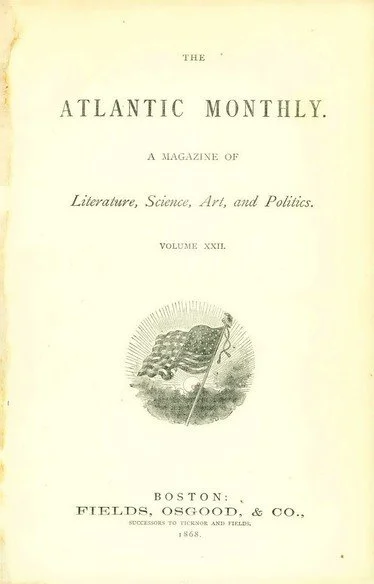
The Atlantic, in 1868, published a review of Dickens’ A Christmas Carol in the December edition of their monthly magazine. In this review, The Atlantic editors discuss how thoroughly the novel communicates the Christmas spirit: a spirit of generosity, warmth, and love, while encouraging readers to “quicken the impulses of tender and thoughtful charity.”
More recently, senior contributor to Forbes, Stuart Anderson, commented on the political implications of A Christmas Carol. With the help of an unhealthy amount of mind-numbing corporate jargon, he purports that A Christmas Carol doesn’t argue against capitalism or for socialism, but rather… in favor of generosity and charity. Hardly a groundbreaking proposition.
This is the direction discussions of A Christmas Carol tend to take. We are left with a message about being generous, charitable, joyous, and merry: at least once a year, that is. This should not be discounted. It is clear that generosity, especially toward the marginalized, is a deeply biblical idea. However, when this becomes the only message we take from Dickens’ tale, we risk falling into the very pitfalls that trapped Scrooge himself.
So where did Scrooge go wrong? Is Christmas joy truly the antidote to his failures? And how can we avoid becoming Scrooges ourselves?
As viewers peek behind the curtain, we see that Scrooge’s issue is not lack of Christmas spirit, but rather years and years of emotional isolation. In place of that emotional lack, he turns to something we all know well: work. Work becomes almighty in his life, a space where Scrooge forges security for himself. Many see money as the primary motivator, adults familiar with “day-in-day-out” know better. It is not only money that consumes us, but the busyness. Money is a byproduct of long hours and hard work, but even more enticing is the distraction work provides from our failures and the emotional wounds we carry.
In the conclusion of A Christmas Carol: Scrooge doesn’t simply receive an increase in Christmas spirit and a decrease in bah-humbugs. He receives a new perspective on his relationship with work, his stewardship of his finances, and connection to those around him. This is exactly what us modern viewers need.
The spiritual challenge here is to understand, believe, and act as if work is an accessory to who we are as a person. It is not our livelihood, our identity, or our security. It provides income (and hopefully a level of fulfillment) on this earth, but the income cannot sustain our needs unto eternity.
UFC fighter Dustin Poirier is a shining example of this difficult distinction. Like virtually any job known to man, cage fighting is a profession that can take more from a person than it gives. Its detriment, however, is far more obvious than in most other lines of work. When fighters remain in the sport longer than they should, the consequences become ugly. The sport is unforgiving, yet it is incredibly difficult for fighters to retire. For many, it provides a way out of difficult upbringings.
Within the UFC community, Poirier is widely regarded as one of the best fighters to never win an undisputed championship, yet he walked away from the sport with seemingly a great deal left in the tank. Poirier said the following in an interview when asked about his willingness to hang up the gloves:
“My wife really helped me out through this last one, putting things in perspective. We were saying, you feel like the fight is your life, but it's just something I do. I'm a father, a husband, a friend, a business owner, a son, a brother. That's who I am. Fighting is just something I do. So if you put in perspective like that, and I switched my mindset of everything's an experience.”
Poirier’s right, and he walks the walk, too. He officially retired in July of this year after a loss in a trilogy fight against Max Holloway. His mindset about identity has, unsurprisingly, impacted his home life for the better as well. Upon his return, his daughter Parker had a surprise for her dad.

There have been over 100 UFC fighters who have achieved undisputed gold during their time in the Octagon, but Poirier is the only one to receive the “Best Dad Ever” belt. To him, it is clear that this means more than a championship belt ever could. He received this powerful display of gratitude because he understands the proper role that work plays in his life.
So how can we live in a way that keeps work in its proper place, taming the wild beast it can become? How can we resist the temptation to use work as a substitute for relationship, purpose, and vulnerability? Here are five ways to help.
Don’t live the lie. When we focus on work to extreme extents, we ourselves begin living a lie. That lie is this: we are first and foremost workers, and our value is determined by the money we make, the job titles we achieve, or any number of other measures of success…pick your poison. Our identity is found first and foremost in Christ.
Be present. Use your time to be present: not only to the people around you, but also to the places you’re in. Don’t be afraid to be bored, and don’t default to work simply because there’s “nothing else to do.” In a busy world, busyness has become our default setting, and it can numb us emotionally. Don’t be afraid to set clear guidelines for when and where you work at home. Discipline is good.
Practice the Sabbath. Many people believe that God didn’t create anything on the seventh day, but that’s not entirely true. He instituted a day of rest. Take this seriously. More specifically, set apart time for spiritual restoration in Christ, even when you are busy. Maybe this isn’t a whole day. Maybe it’s a moment each day. Consider what this could look like for you.
Lead the conversation. High school students are beginning to feel the same pressures we feel with work, though theirs often revolve around school. For upperclassmen especially, there is pressure to know what college they’re going to attend, what degree they’ll pursue, and what comes next. We must lead this conversation with truth. And the truth they need to hear is this: the decision you’re about to make is big and important, but it is not life or death. It will not ruin your life or eliminate your ability to succeed.
Apologize. As followers of Christ, there is no weakness in admitting our faults; rather, there is strength in forgiveness, redemption, and freedom. This means we can be bold in apologizing to our loved ones when work has dominated our lives. We can admit our weakness, and at the same time rejoice in the freedom that invites and empowers us to change.
My prayer for you is that you would dwell on these reflections, and the ones already resting on your own heart, as you enter this new year. If we’re honest, we all become a little Scroogey at times. But to be a Scrooge is not merely to be greedy or money driven; it is to be consumed by work. Instead of living under that weight, may we be freed by seeing work in its proper place. May we remember first who we are: children of God, redeemed, beloved, and full of potential. From that foundation, may we move forward faithfully in our various vocations, whether occupational, familial, or otherwise, living out our calling with clarity, freedom, and joy.
Thank you for reading my first Dear Parents, blog! I plan to publish a new blog post during the first week of each month in 2026 and see where this can go further into the future. If you have any comments, questions, or would like a specific topic or question discussed in a future post, feel free to email me at [email protected].
